
The classroom tour is back this week with the amazing Heather Thompson! I met Heather two years ago when we both worked the same summer job. I immediately gravitated towards her because she’s an incredibly knowledgable educator and she’s an all around fun person. Our coolest connection is that we taught about 5 or 6 of the same students; Heather had them in 1st grade and then I taught them in 12th grade. In addition to being a great teacher, Heather also writes the funny (and helpful!) fashion blog Regular People Wear Their Clothes. She and another fellow teacher take pictures of their outfits everyday, write a highly readable reflection and post sourcing information. I’ve written about their blog in a past post about what teachers should wear and I highly recommend checking out their site. I am so excited to share her dynamic classroom today, thanks Heather!

My classroom door is a little dark and uninviting, so here’s a picture of me in the classroom library instead. This is where the magic happens anyway! Welcome to third grade!
Where do you teach? Oakland, CA.
Who are your students? The student population at my school is primarily low-income and English language learning. Our school’s instructional program values and focuses on critical thinking skills and curiosity. We have a very stable school community with low student turnover, so most of the students have been at the school since Kindergarten. This means that by third grade they are amazingly deep thinkers. My class this year is also very creative and artistic.
What do you teach? I teach third and fourth grade.
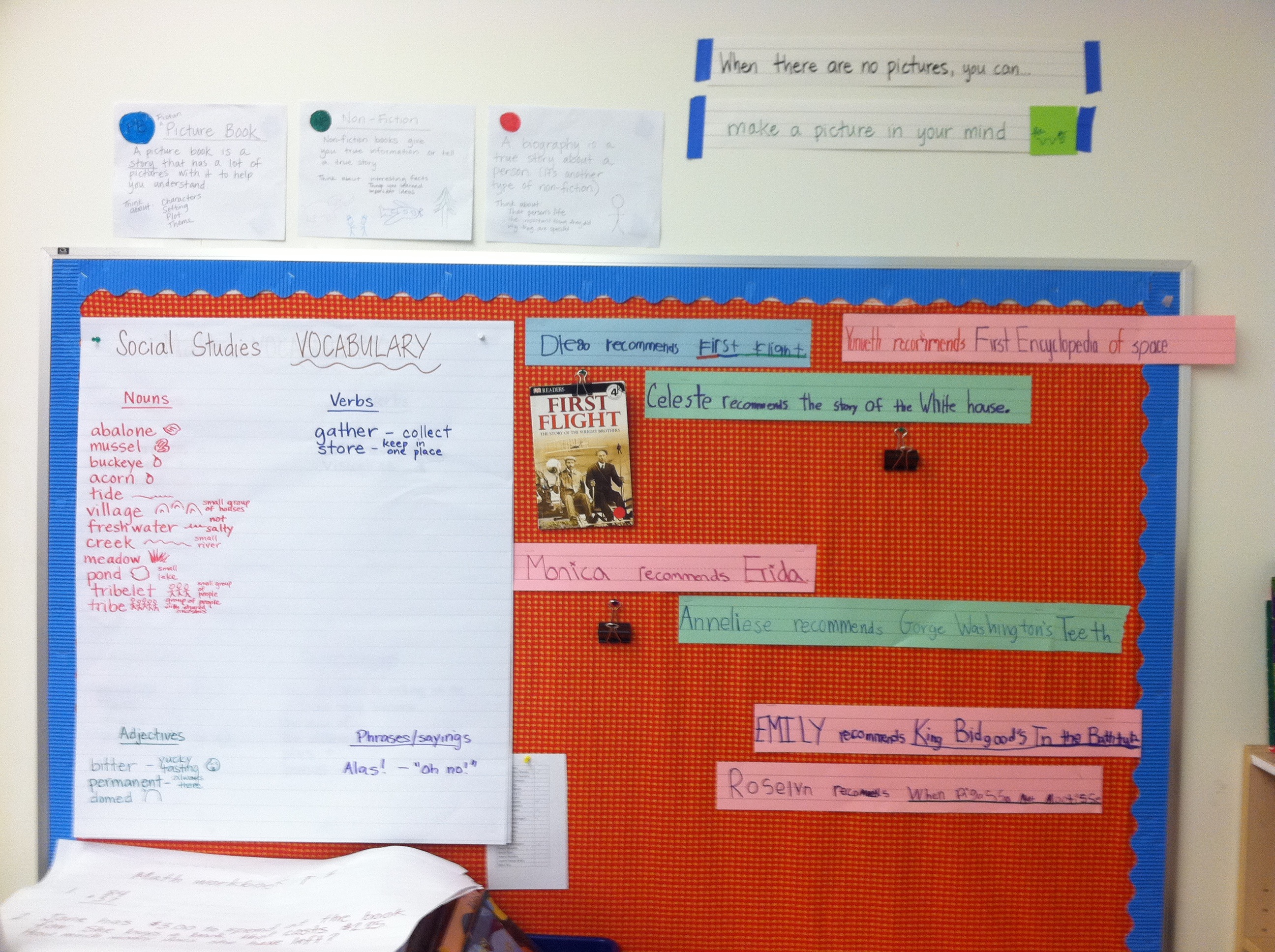
This is one of two bulletin boards at the front of my classroom. I use this one for vocabulary and book recommendations. You can see that a lot of the recommended books have been checked out by other students! The vocabulary is organized on posters by subject, so I can easily swap the posters out depending on what lesson I’m teaching.

We’re lucky to have giant windows in our classrooms. A lot of teachers cover them with posters or put furniture in front of them. I understand this, since wall space is at a premium, but my aesthetic sensibilities have over-ruled my desire to be able to keep posters up. Instead, I hang student work from the windowsill. (It’s magnetic!) And yes, we have pet birds. Word to the wise: birds are much easier classroom pets than hamsters or turtles. I should know—I’ve tried all three.
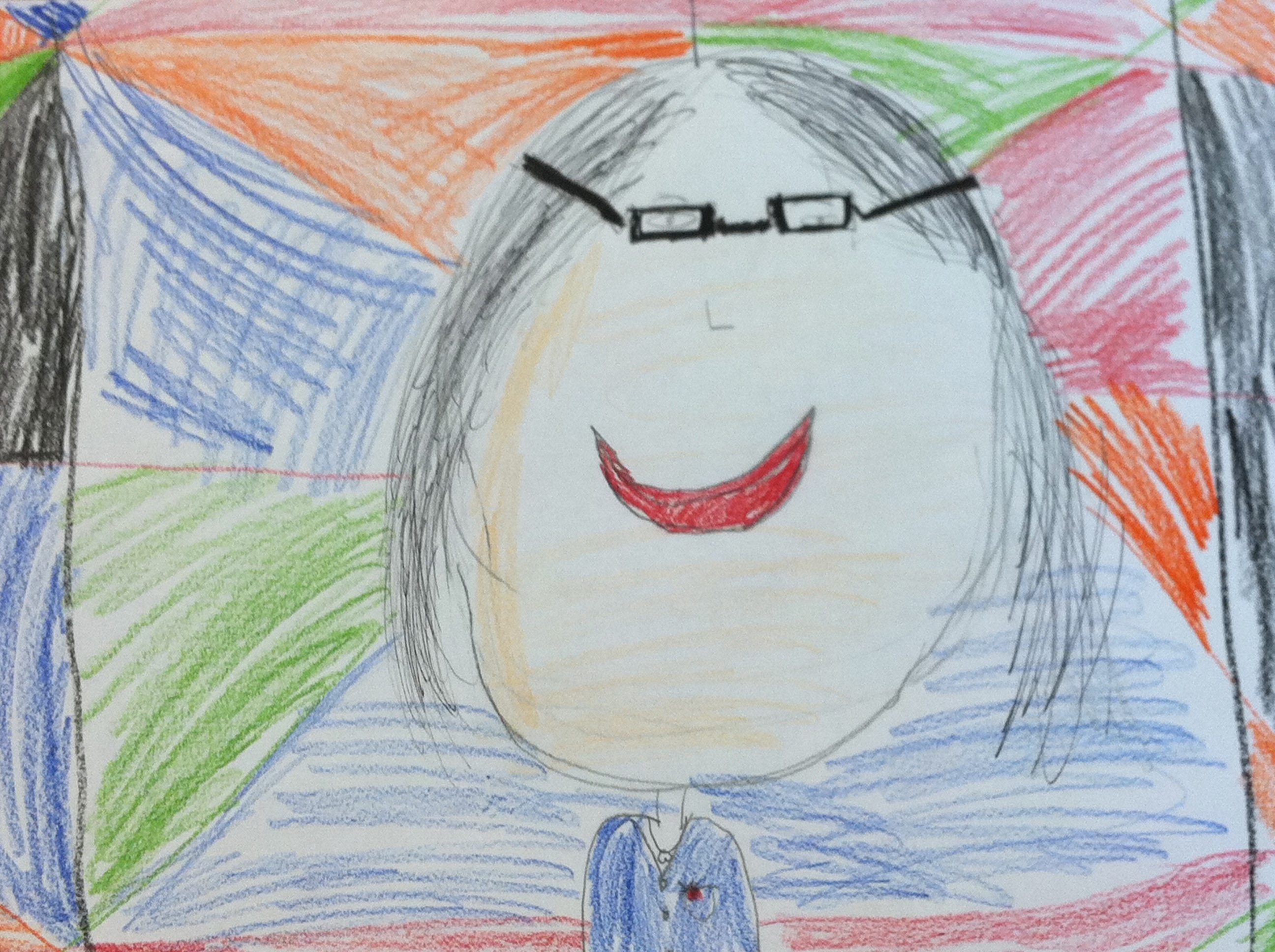
Don’t worry, someone made a portrait of me, too
Describe your teaching style in one word. I would describe my teaching style as “professorial.” We definitely have fun, but I also really try to help students develop the habit of thinking carefully and thoroughly about each task they do.
What is your go-to literacy strategy? Reading notebooks (see below)
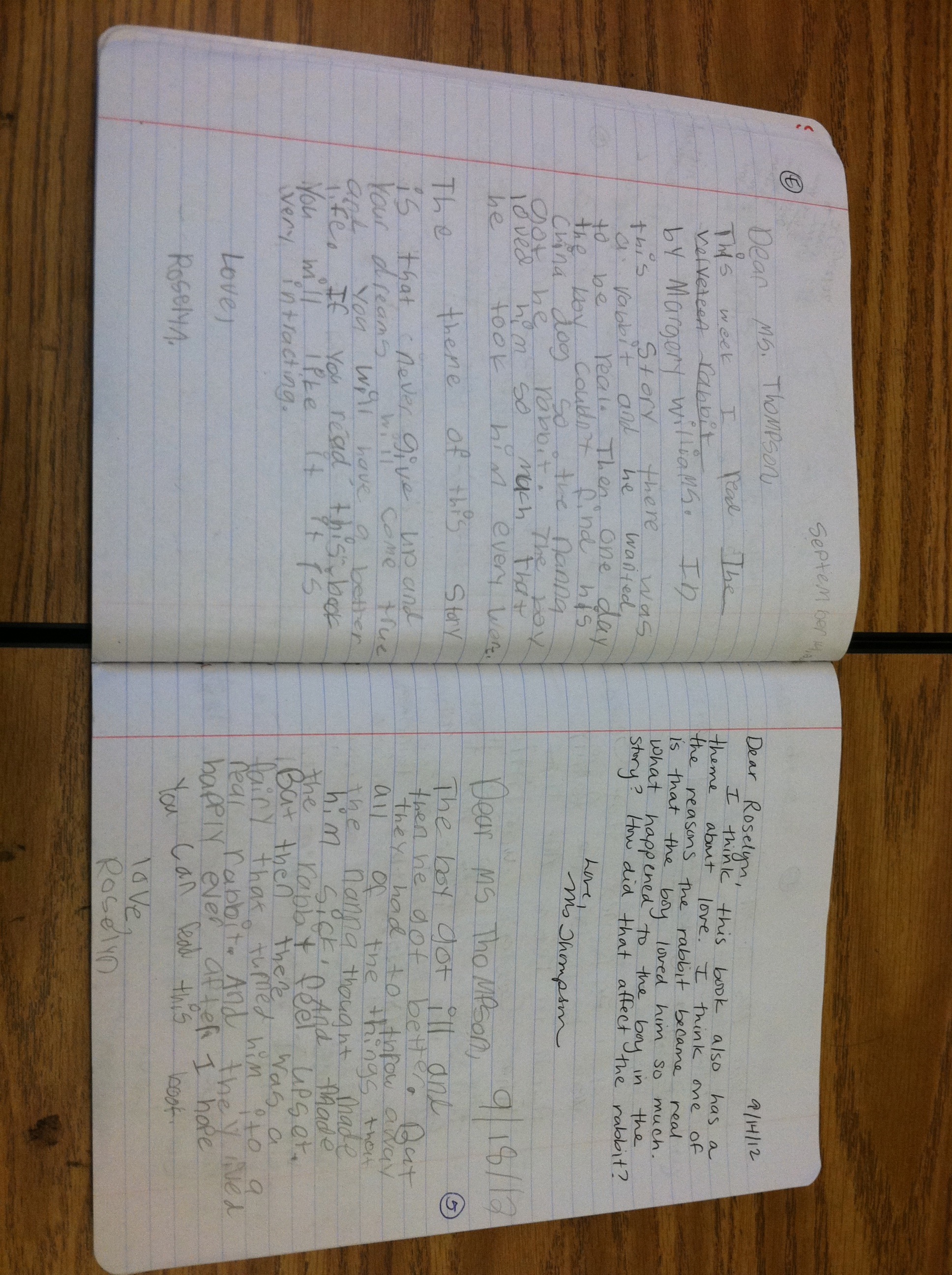
We also use a notebook for most of our reading assignments. I love reading notebooks! My students write a short entry (1-2 sentences) every day, and then on Fridays they write me a letter about what they’ve been reading that week. I write them back over the weekend, and on Monday their entry is a response to me. When I grade their notebooks, I give grades based on the quality of their entries, and I also keep a running list of who has demonstrated understanding of key learning targets. For example, this student is starting to show an understanding of theme, although it’s not solid yet.
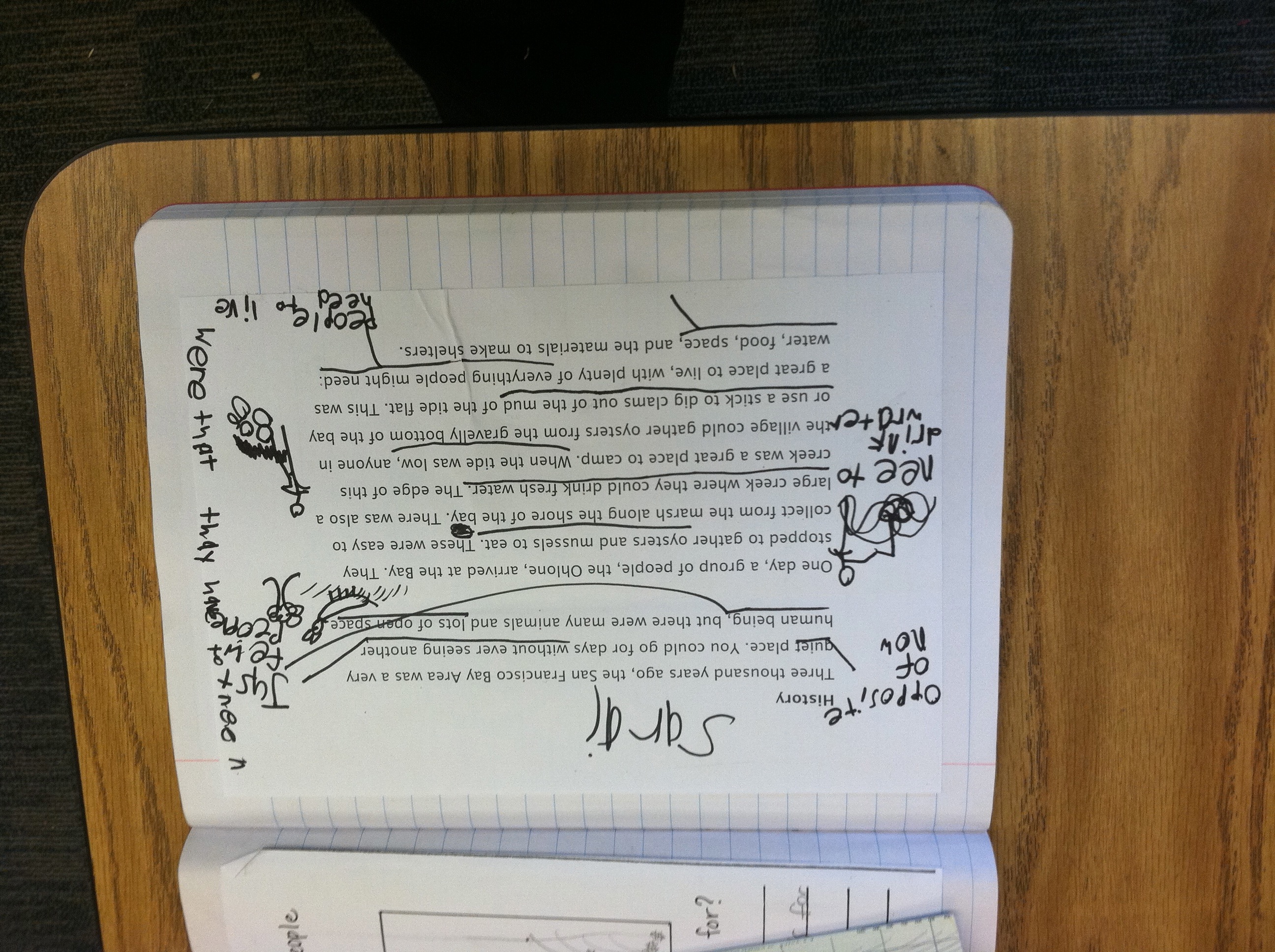
Here’s an example of a social studies reading assignment. We read and annotated the passage together. I always integrate reading and content whenever possible! Because my class loves art, we also do a lot of reading and sketching to help us visualize. *Abby’s Note: Annotating primary sources in 3rd grade = Common Core compliance and general butt-kicking awesomeness
How do you motivate your students? I try to set goals that help us compete against ourselves and celebrate improvement, rather than goals for absolute mastery, which can feel scary to kids who are struggling. I assess student reading levels each month, and when they grow a level they color in a square on the reading level chart. For the math goal, I add up how many correct answers the students get on a pre-test, and then figure out how many answers we would need to get correct if everyone grew 20 percentage points.
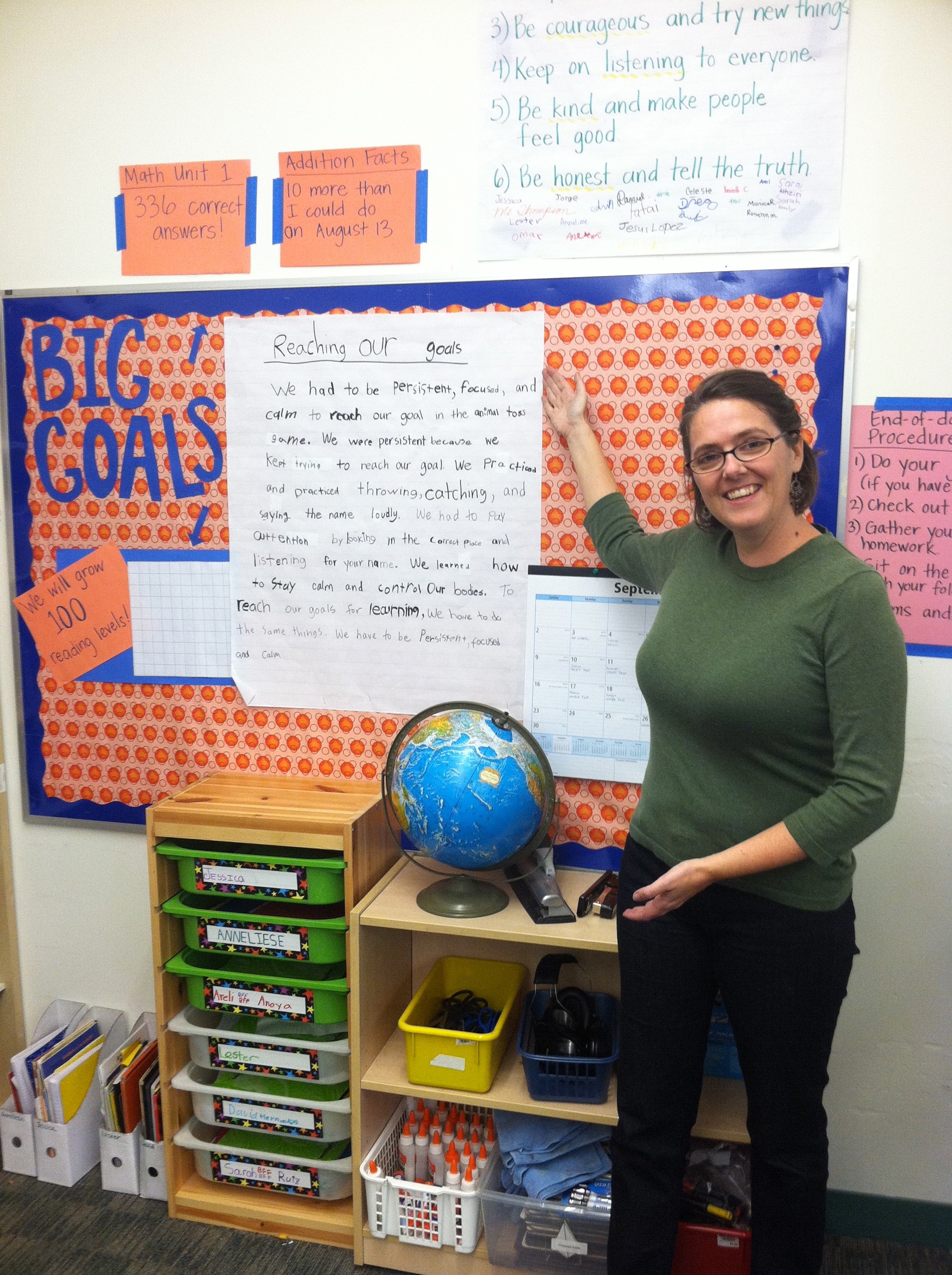
To help students learn what it takes to reach a goal, I start every year with a group game we call “Animal Toss.” It’s a bit complicated, but basically it involves throwing multiple stuffed animals around at the same time while trying not to drop them. We set a goal for how many animals we can get going simultaneously, and then practice every day. After the game we talk about what we did to get us closer to the goal, and what we still need to work on. When we finally reach the goal (it took us four weeks this year—not gonna lie, I was starting to wonder), we write a paragraph about how to reach goals.
What is your favorite way to check for understanding? I am constantly assessing my students. As a multiple subject teacher, it’s especially hard to keep 4 or 5 assignments a day organized. Here are my two best organization tips (see below):
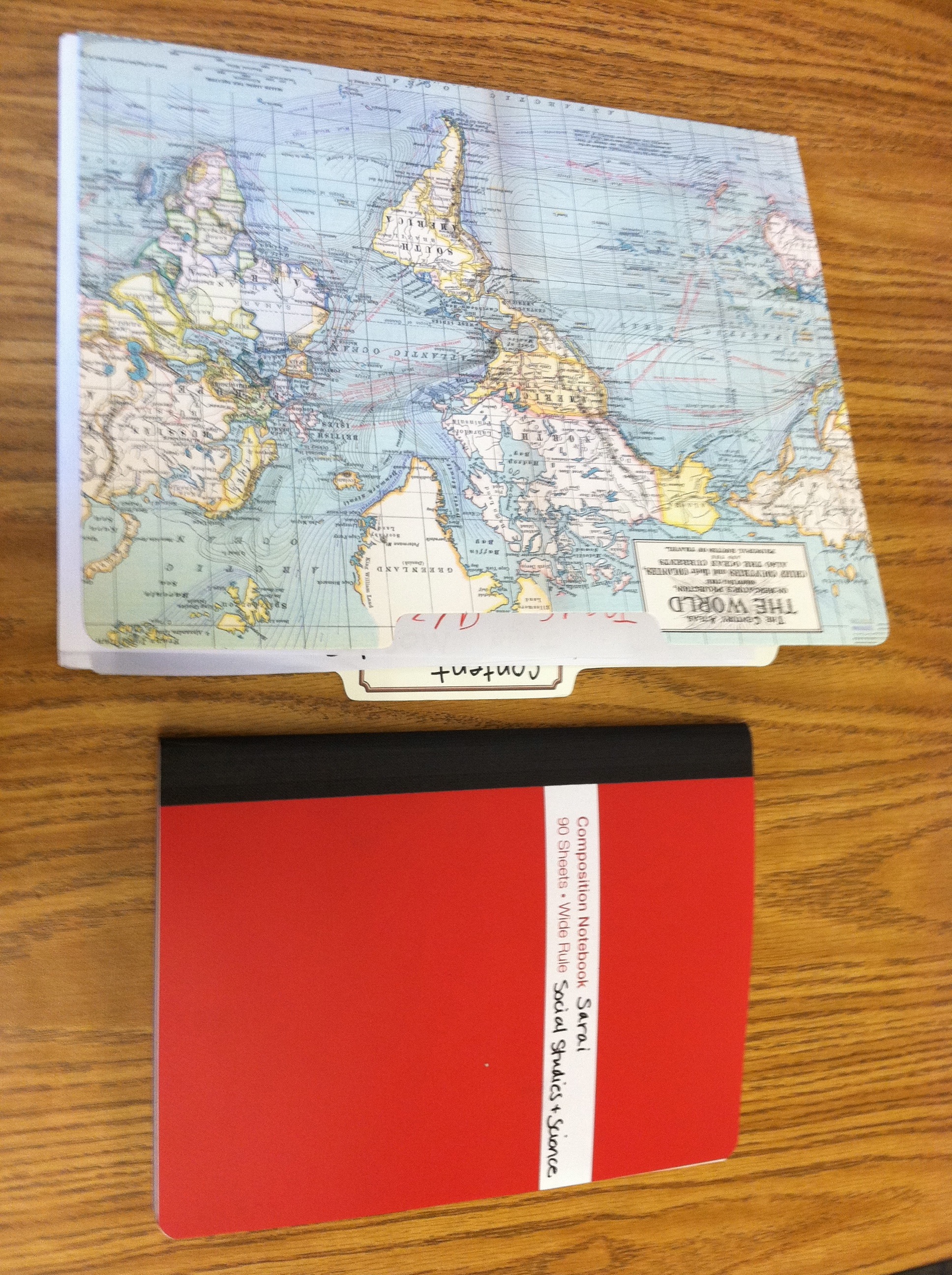
When students turn work in, they turn it in to a folder labeled with the subject area. This way at the end of the day I just pick up the folders, and all the work is organized by assignment. If someone turns something in late, they just find the correct folder and put it in, which saves me a lot of time. Most ongoing work is kept in a notebook. Third graders have a hard time keeping track of papers, so if things are glued down they can easily refer back to them. Additionally, I know that if I need to look back at a student’s work, it will be in the notebook.
Classroom rules, signed by all students.

 The Sacred Profession