77 Years in the Classroom

“The Lord will tell me when to stop.”

– Olivia Neubauer, who died this week at the age of 100 after 77 years in the classroom

As I read this story about Olivia Neubauer I vacillated between mild horror and a silent prayer of “Please God let that be me!” I have so much respect for a life time dedicated not only to education but to classroom instruction but how is it possible when somedays it seems like I will seriously not be able to teach beyond 6th period?

Clearly longevity is not the result of working yourself to the bone – it’s a marathon not a sprint. I personally reject the burn-out model of teaching, regardless of how glorious or productive it might sometimes appear, and believe we should help each other “teach in balance” as one of my mentors and friends says. What stood out to me was how in 1964, after 20 some-odd years in public schools, Neubauer helped found a private Lutheran school where she taught for the next 49 years. On the one hand she did not go into administration but on the other hand she surly must have directly impacted the way that Lutheran school was set-up and run. Additionally, I wonder if the same kind of longevity would be possible in a public school? The private school must have been able to accommodate her particular needs as she aged in ways a more regulated, traditional school could not.

Here is one lesson I am walking away with: teachers need to found or run more schools and then stay in the classroom while they continue to be campus leaders. I often feel one of the most frustrating aspects of being a classroom teacher is how absolutely powerless I am. Sure, a good principal listens and consults with her teachers however teachers are at the mercy of a principal’s collegiality and willingness to be influenced. Acting as a founding teacher should look more like shared or distributive leadership rather than a hyper-burn-out model for teaching; unfortunately, most of the founding teachers of various schools (mostly charter) that I know never stay more than 2 or 3 years.

Olivia Neubauer also reminds me to see the long game and forgive myself when a lesson, day, unit or year doesn’t go how I planned. Imagine what a life time dedicated to education contributes?

What would it take for you to teach 77 years?

“The New Majority”

Last year I noticed that I, at the lofty age of 30-something, was one of the oldest teachers in my building. I chalked it up to teaching at a charter school which often have a young teaching force but the graph above shows young teachers are what Teach Plus calls the “new majority.”

Teach Plus recently released a new report that compares the perspectives and opinions of the new majority to those of teachers with 11+ years of experience. The findings are both intuitive as well as surprising. Below is a table that highlights issues where both sets of teachers – the new majority as well as experienced teachers – strongly agreed with one another on survey questions.


What I found interesting here is that both groups of teachers believe there needs to be a clear and measurable standard for excellent teaching; however, they also both believe current evaluation systems are not getting the job done. Another critical agreement is class size. Although some research shows class size technically has no impact on student achievement (particularly at the secondary level) teachers clearly agree size does matter. Even more interesting are the areas where the new majority and experienced teachers disagree:


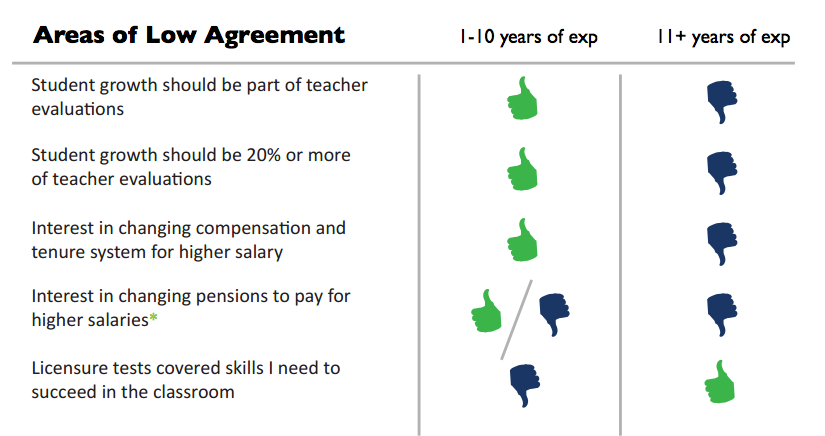
These shifts seem to line up with changing education policy and certainly are a nice validation for the Race to the Top stipulations.  Regardless of the merit or challenges associated with policies like linking student growth to teach evaluation, I think this study shows an eagerness on the part of new teachers – now the majority of teachers – to see our profession reinvented. Unfortunately, we also know the new majority exist in part because three out of every five new teachers quit within the first five years of teaching. Clearly we have a unique window of opportunity with this young, open-minded teaching force (this is not to say those of us with 11+ years are not open-minded!!) however we should be careful to advocate for policies that both raise the bar for our profession as well as keep teachers in the classroom.

New majority teachers what would keep you in the classroom for the next decade?

Schools and Sandy

Interested in how schools are dealing with Sandy? There is a great article at Time  (written by my sister-in-law, Sarah Garland!) about a school on Coney Island and the principal’s battle to save it.

Trying to Keep Organized? WorkFlowy is Working for Me

I know I have sworn eternal love and devotion to my Moleskine planner (I’m not giving it up!) but I recently started using a really amazing list making organizational app called WorkFlowy. I think I’m in love . . . the creators of WorkFlowy use the description “Your brain on one page” and I actually think that’s pretty accurate. The program allows you to make lists and then file sub-items under each item. The design is sleek and simple and there are mobile apps for your smart phone that automatically sink with the website list. What I’m really loving is the ability to have all of my lists in stacks (or digital files? it’s a hard metaphor, you sort of have to see it) in one place.

This kind of one-stop-shop list making is particularly helpful for teachers who are constantly trying to keep several ideas, questions, tasks, meetings, etc. organized at the same time. I was thinking I could potentially create a list of class periods, input the names of my students and then keep quick notes or brief records about students all in one location. Check out the video and then give it a try!

If you already use WorkFlowy how do you like it? If you try it out, let me know what you think!

Have a great weekend y’all!

Ms. Duncan Evan’s Classroom

This week’s classroom tour comes from Hurricane Sandy survivor Cristina Duncan Evans in Baltimore, Maryland. Aside from a few power outages and three days off school (is it wrong to be jealous?) Cristina reports Baltimore is doing comparatively well. I recently attended a conference full of accomplished educators and Cristina stood out; she seldom spoke but every time she did I had a mini-revelation. Cristina is one of those people who when she speaks everyone in the room turns and listens. Thanks for sharing your classroom Cristina!

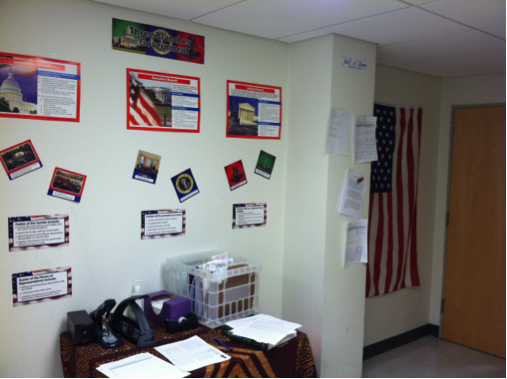
Welcome to my classroom! Please excuse my attire – I’m a little casual today because it’s a professional development day. I’m so glad to share my space with you! Right inside the door, you can see my folder system where extra copies go. There’s one folder each for Monday-Thursday and a folder labeled ‘Last Week.’ My students know that if they are absent they can pick up handouts and assignments from these folders. I also keep copies of frequently used sheets, like a current events analysis and weekly drill sheets available for students on that wall.

Where do you teach? In Baltimore City at the Baltimore School for the Arts

Who are your students? Most of my students are 9th, 11th and 12th graders.

What do you teach? I teach US History and American Government

This is my basic staging area where I place handouts and graded work that needs to be passed back. As a social studies teacher, I’m pretty much obligated to have up the three branches of government posters. The American flag is one of my favorite things in my classroom.

My ninth grade students maintain student work folders. At the end of each unit, they empty out their binder and put all of their old notes, readings, and graded work in a folder that I keep at the back of the class. It helps them stay organized. It also means that at the midterm and end of the year state test, I can give them back a year’s worth of notes, without worrying about them losing important pieces along the way. Finally, it helps me when I have parent meetings, IEP meetings, or meetings with a counselor, because I can always access examples of particular students’ work. It’s also be great in the past when I’m applying for peer-reviewed awards, to be able to easily add student work to my teaching portfolio.

Describe your teaching style in one word.  Evolving. For better or worse, I’m constantly trying new things and experimenting.

What is your go-to literacy strategy?  In American Government, one of my favorite strategies is current events analysis.  Each quarter, students must turn in six current events articles and an analysis sheet for each one.  The analysis sheet asks students for:

  • A summary of the article
  • What they found most interesting and why
  • Familiar terms and their definitions
  • Unfamiliar terms and their definitions
  • A positive possible outcome of the event described
  • A negative possible outcome of the event described that’s not just the opposite of the positive outcome
  • The connection to American Government

I love this assignment because it helps kids develop the background knowledge necessary to fully understand the class.  Often I’ll give the students themes.  For example, second quarter, three of the events have to be about civil liberties and three have to be about civil rights, since those are the unit’s we’ll be working on for most of the quarter.

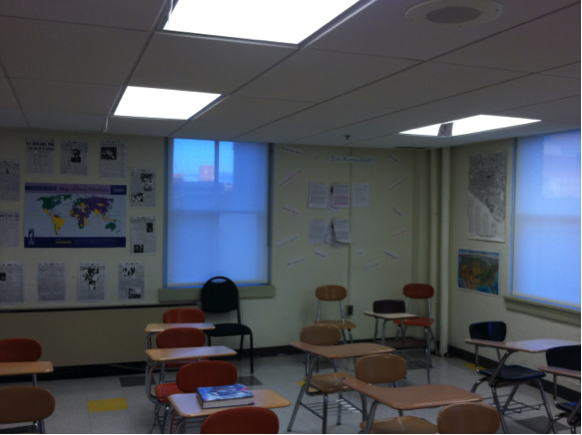
For the most part my desks are in rows, but about once every two weeks I make a circle for discussions or create small groups for kids to work together. In the back of the classroom you can see my freedom of the press wall, which has a map showing global press freedom and great student work. I love maps!

How do you motivate your students? I try to build student motivation by focusing on asking good questions and giving students the chance to listen to each other’s answers.

What is your favorite way to check for understanding? By cold-calling students using a random method, like popsicle sticks or a random number generator.

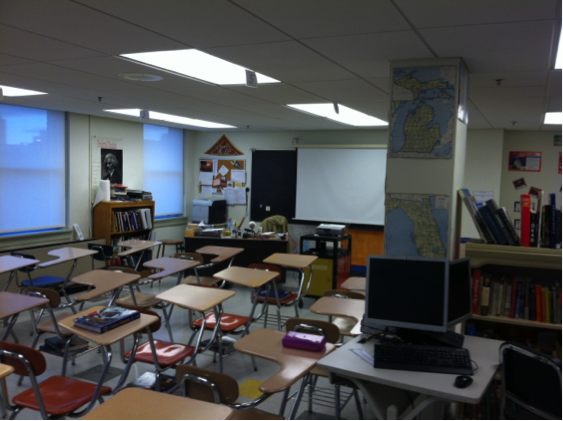
Here’s a view of my classroom from the back of the room. I have a few computers that I let students work on if they need to. I also have a growing classroom library that I’m not quite sure what to do with – there are a mix of all different types of books, but I haven’t yet done much independent reading in class. You can probably tell from looking at the front of the room that I’m a big LCD projector teacher – almost everyday I use powerpoint.

How much time should students get?

There is a short but interesting post over at Education Week that considers the question of how much time students should have on exams and assignments. The teacher essentially argues students should have as much time as they need and sees timed assessments as an artificial construction that doesn’t mirror real life tasks. True. However, as those of us in Texas can attest, there is a dark side to allowing students to take “as much time as they need.”

The state exam for Texas, known as the TAKS, permitted students to spend the entire school day on 40 – 50 multiple choice question exams. Some schools went a step further and forbid students to even turn in a completed exam until 2 in the afternoon on testing days in order to ensure they took their time and checked over their work. As a teacher, these were some of the most physically grueling (teachers couldn’t sit down, I was even given a pedometer once and encouraged to compete for the “most steps taken throughout the testing day”) and mentally lobotomizing days of my teaching career. Most students did take their time and usually finished just before lunch for a total of 4 hours testing. Once I had a student stay at school till 10:00pm finishing an exam because, she later said, she wanted to see how late we would let her stay. Students as young as 3rd grade were kept in the same room all day (lunch was eaten in the room) and only allowed out for monitored restroom breaks.

In addition to these ridiculous extremes the “as much time as necessary” approach led to measurable reductions in Texan students’ ability to perform on timed tests like AP exams and the SAT. I wonder though if the issue here isn’t with the time allotment but rather with the value and emphasis placed on these high-stakes exams? What if the same effort was dedicated to more rigorious academic tasks like conducting an authentic scientific experiment, writing a historical paper using a local museum archive, or learning how to file a tax return for a cupcake shop?  Or what if, God forbid, the same energy was spent on creative tasks like playing an instrument, painting a mural or choreographing a modernist take on the Nutcracker?

My thinking here really crystalized when I became a mother. I thought, “There is no way I will ever allow my daughter to sit for 8 hours in the same classroom with the single task of completing 50 multiple choice questions. It is simply inhumane.” So what can we do? Here some thoughts I’ve had:

  • Advocate for appropriate time limits for your students: Often the problem is not enough time as opposed to the TAKS situation. Teachers play a critical role in ARD meetings by advocating students with IEPs receive the time they need to be successful. Additionally, adapting a flexible or at least scaffolded approach to timed assessments can also help students who struggle with timing be more successful.
  • Make sure students are aware of time during an exam: Project a time on the front of your room or give students time updates by calling out minutes remaining or writing the time on the board. Encourage students to wear watches on exam days.
  • Lead your class in stretches before, during and after the exam: Sitting for such a long time is simply unhealthy. Help students – regardless if an exam is timed or untimed – by leading a class-wide stretching session. Roll the head, shoulders, do a few back twists and finish with some jumping jacks to get the blood flowing.
  • If time is inflexible (as with a state exam or the ACT) practice, practice, practice: The more realistic and authentic you can make practice exams the better. Time should play a central role in practicing for any timed high stakes exam. Students should get the feel of what the time limit for a particular exam is and should know, for example, how many questions to have answered by 1 hour in to the exam and what to do if they are running behind or if they have extra time.
  • If this all sounds crazy, have your child, or a child you love, opt-out: There is a time and place for standardized testing but many believe the pendulum has swung too far. It used to be considered fringe and radical but more and more parents are refusing to allow their children to participate in low-rigor, high-emphasis state tests. As with all civil disobedience there is a right and a wrong way to do this but I think there is potentially a lot of power in parents and students taking a stand through respectful non-compliance. Check out this website for more resources.

How do you handle timed assessments in your classroom?

The Teaching Test: Feedback, Reflection, & Movin’ On

I recognize the critical role standards and high-stakes testing have played in bringing educational accountability to schools that failed communities year after year. However state assessments do not provide useful feedback for students or teachers; the goal is to “pass” not to improve or grow or reflect critically. While we certainly must equip students to pass these exams we must also provide them with substantive feedback, opportunities to reflect, and the chance to construct a path forward towards additional growth.

Providing Feedback: I find the key component here is to assess based around a clear, pre-established criteria such as a rubric, set of objectives, or benchmark paper. When grading students’ performance provide them with a highlighted or annotated rubric showing where they could improve and where they have already succeeded. Strong feedback can never be a simple grade because a mere number or letter does not enable a student to improve her performance in the future. One way to do this with a multiple choice style exam is to collect the answer document (scantron) from the student but let them keep the test. Then immediately give them a copy of the key with explanations for each correct answer choice as well as links to the objectives (see below).

Students should grade themselves, track their objective mastery progress, and then reflect on how they could score higher in the future. This instant feedback will create a learning via testing experience as well as eliminate the “Have you graded it yet?” phenomenon.

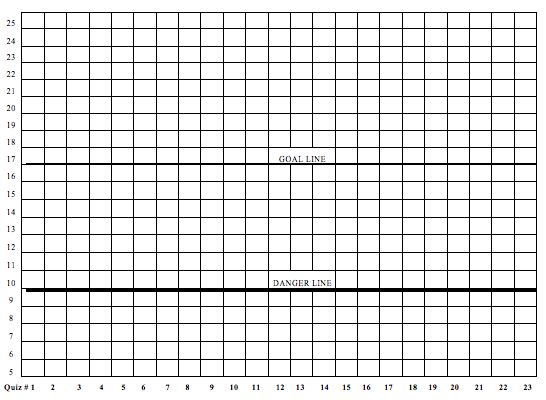
Opportunities to Reflect: It is tempting to never talk about a test or paper once it is passed back and in the grade book; however, a graded exam can be a powerful teaching tool. One quick way to do this is to grade a sample essay or exam in front of the class while students attempt to grade their own or follow along on a sample. Have them predict what they think they will earn on their exam and then pass out graded exams. Students should then reflect on the differences in grading between their self-assessment and the grade you assigned. I keep all exams in a binder with the students name on it on a big book shelf in my classroom. When we pass back exams or papers students grab their binder, inset the exam and then fill out tracking and reflection sheets. They track the fluctuations in score, the mastery of skill objectives and the accumulation of knowledge. The graph below is my quiz tracker that allows students to see their progress over time as well as whether or not they have met the passing mark (Goal Line) for each quiz. I also have a Danger Line to let students know when they are at an unacceptable performance level that will require after school tutorial and quiz re-takes.

Constructing a Path Forward: I have learned that students must believe they can and are getting better at the subject you teach because if they believe they “just aren’t good at X” or that they will inevitably fail your class then it is only a matter of time before they become noncompliant or even a huge behavior problem. Each assessment should show students exactly where they need to improve their performance. It is worth it to take some time to elaborate on specific steps students can take to do better on each particular objective or skill you are trying to teach. See below for an example reflection sheet for my Historical Investigations:


Although it can take some extra time and effort to make tests, even life-sucking standardized tests, become teaching tools it is ultimately well worth the effort. What do you do in your classroom to ensure students learn from summative assessments?

Germs vs. Teacher

Apart from nurses and doctors, no other profession is armed with the germ-butt kicking antibodies teachers develop due to our wide and consistant exposure to each illness de jour. However, sometimes our germ defenses fail us and we succumb to sickness; and tis the season colleagues! I am writing this post through a fog of aches and snot . . . I’ll spare you the details but will pass on my tips for preventing and dealing with illness:

  • Drink lots and lots of water. I think this is the number one key to beating off illness. Do your best to get in those obligatory eight glasses and you will be well on your way towards a healthy winter.
  • Get your sleep on. When you miss an hour or two of sleep it begins to add up in what is called a sleep deficit. Take some time this weekend (you’ll have an extra hour Sunday night!) to pay some of that deficit off. I realize thus far my tips are painfully obvious but hydration and rest are the cornerstones of avoiding the germs of sick children swarming around you all day long.
  • Airborne. I know research shows this stuff has no measurable effect but it totally works for me. Several years ago I went over to a friend’s house for some indian tacos (so so so good) hand-made by his visiting mom. Turns out his mom not only made some darn good fry bread, she was also the principal at a successful Navajo elementary school. I was coming down with a little cold and she absolutely sang the praises of Airborne. We went home that night with extra fry bread, two bottles of Airborne, and a devotion to what is likely a placebo product.
  • Shake the kids hands, don’t use Germex but do wash your hands before your eat and at the end of the day. Some of my more cautious colleagues leave off with the hand shaking once flu season gets into full swing. They set out the bottles of disinfectant and demand sick kids keep their distance. I take what I call the “inoculation” approach; expose yourself to the germs to build up resistance. To each his own . . .
  • If you do get sick, for petesake STAY HOME. I used to believe I was honor bound to show up to school every single day and I thought if I didn’t the world would literally fall apart. The truth is your students will not only be fine without you they will be less likely to get sick if you keep your contagens at home. We need to help each other out on this one colleagues; if your buddy comes to school sick empower her to get her butt back home. Sometimes we just need permission to do what we know is actually best for ourselves. Don’t be the source of an epidemic, stay home (or at least take a 1/2 day).

What other advice do you have for teachers hoping to avoid or get through school-borne sickness?

Ms. Casey’s Classroom

One of my first encounters with the amazing Nik Casey involved her standing on a table in a cowboy hat leading a group of teachers in rousing chants and cheers. Her energy was infectious then and it is clearly evident today in her classroom. After many years as a successful science teacher Nik switched to English. Her approach is innovative and compelling – thank you for sharing your classroom Nik!

Where do you teach? Denver School of Science and Technology in Colorado

Who are your students? 9th Graders

What do you teach? Humanities (essentially, English with a flare of history and a focus on social justice issues)
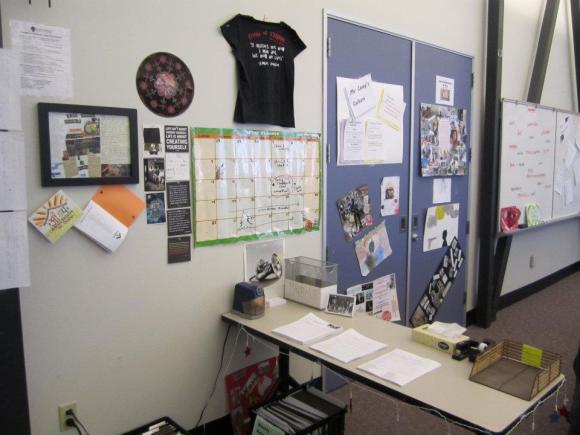
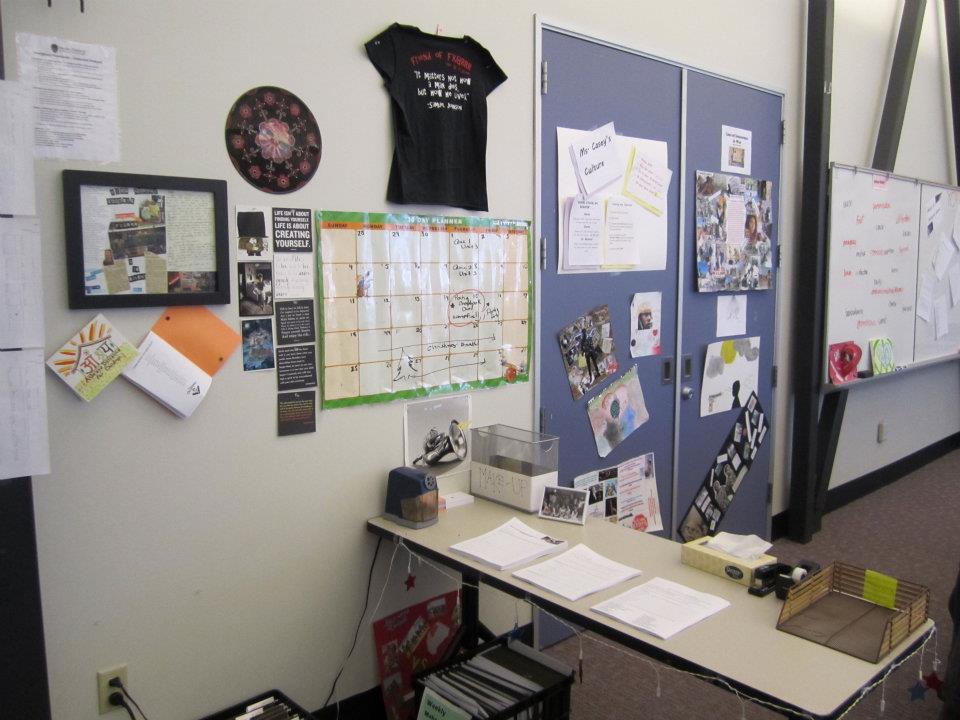
“This is the entrence to my classroom with the most important items. Handouts are always placed on this table for the day and students pick them up on the way into class – routine. To the far left is the ‘Make-up Bin’ and to the far right at the corner of the table is the ‘Homework Bin.’ In center is always a stapler and tape – for those last minute submissions that need some organization.”
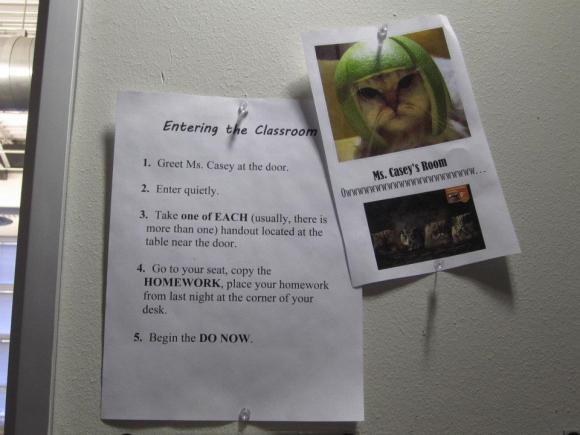
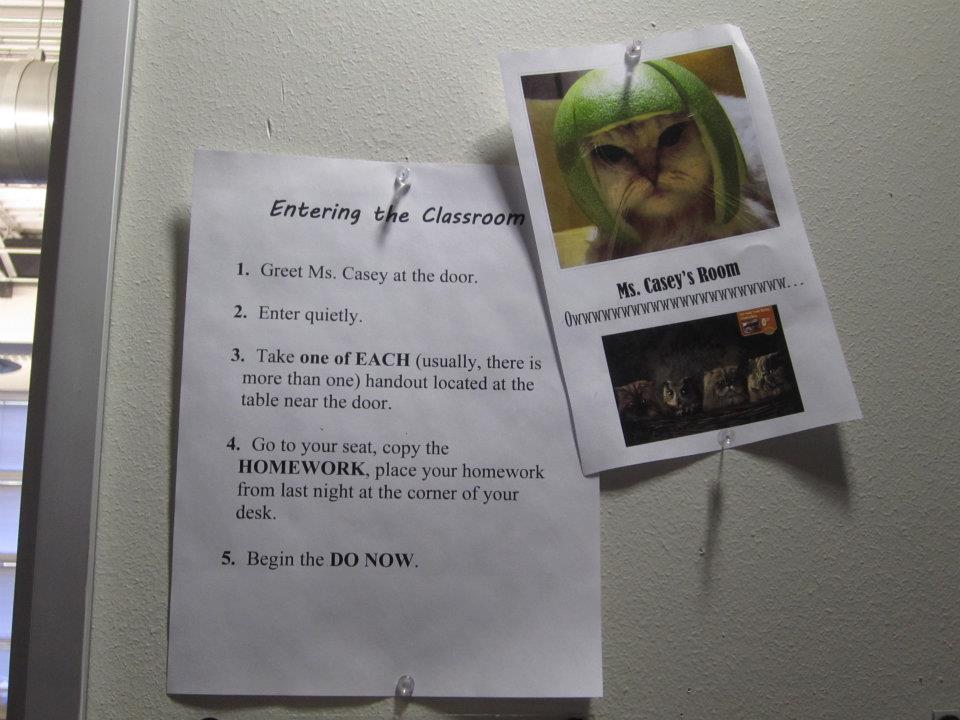
‘How to Enter the Classroom’ instructions. Trust me, freshmen needs this. . .
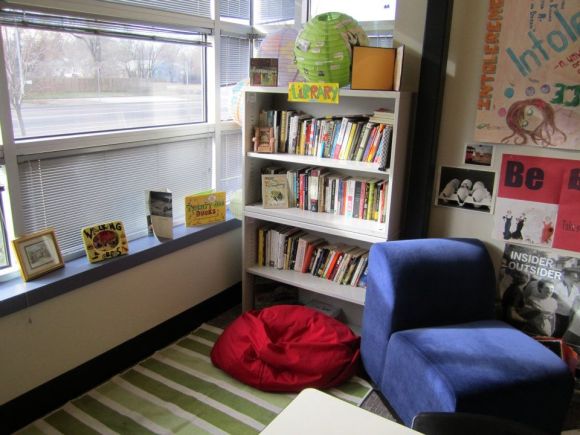
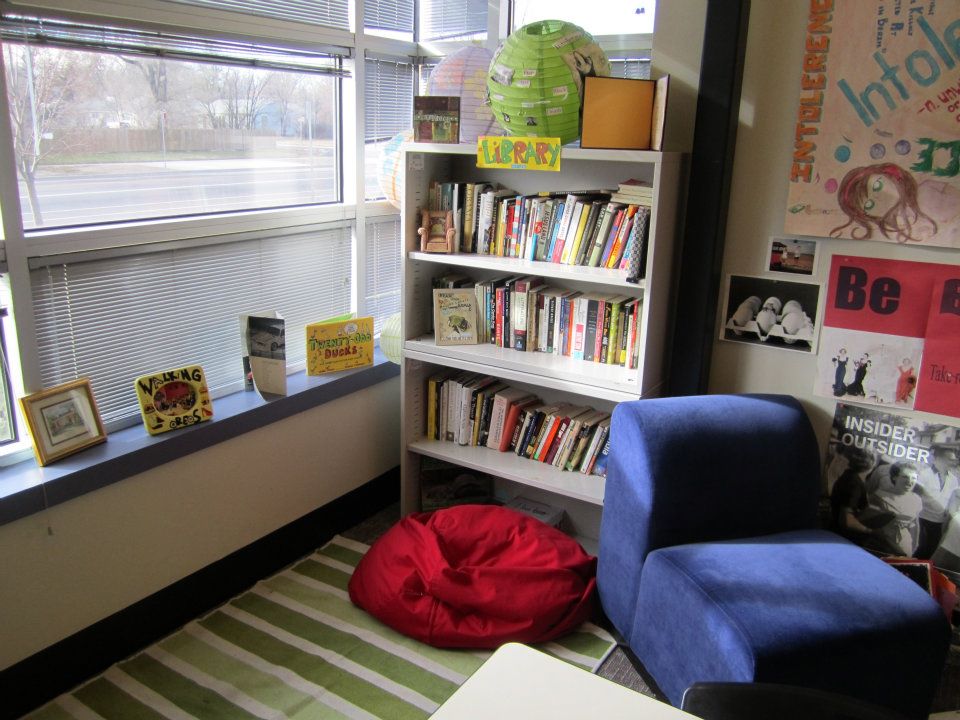
Our Library – a cozy must!

Describe your teaching style in one word: Capricious
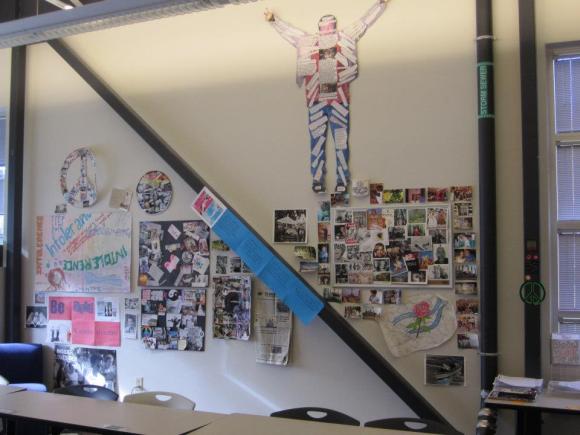
Ms. Casey’s paraphernalia.

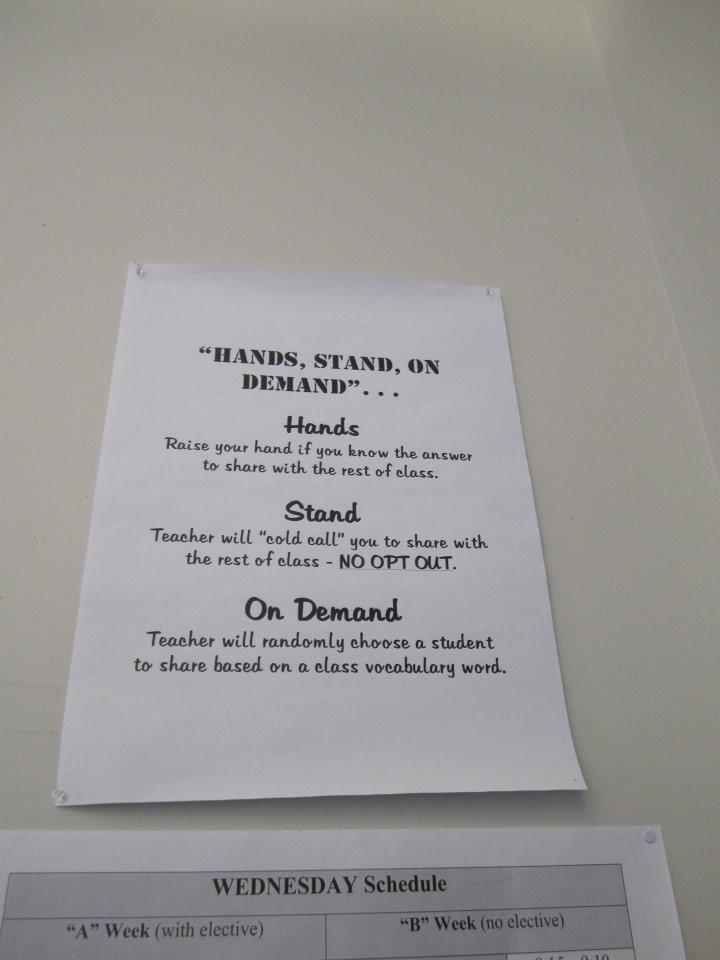
“Hands, Stand, and On Demand” system. ‘ Hands’ is straight forward, for ‘Stand’ you cold-call, and for ‘On Demand’ wacky photos that represent vocabulary words.

What is your go-to literacy strategy? The Art of Close Reading (click here for more info). *Nik also sent along the handouts and power points she uses to introduce herself and her classroom systems to her students during the first three days of school:

Desk arrangement in what I call “debate style” with two sides of the classroom facing each other. Vocabulary cards are on the desks.

Vocabulary Cards – a word, its definition and an awesome picture/photo to help a student remember the meaning of the word (tackling all five of the human senses) is located at each table seat throughout the classroom. We use this to learn the words via tactile activities.

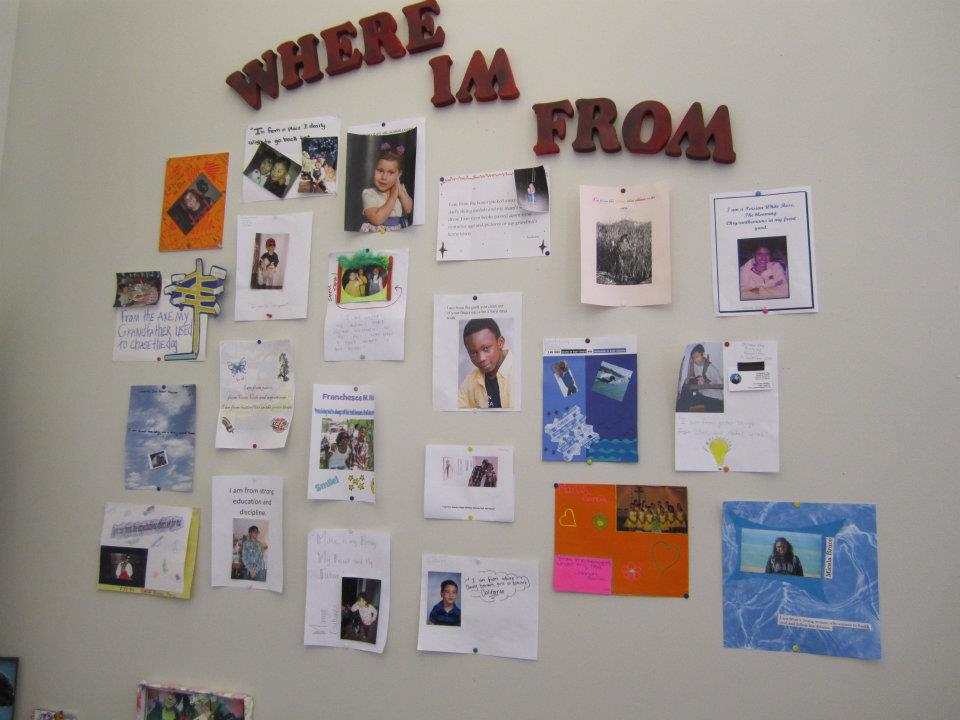
This is last year’s ‘Where I’m From Wall’ – it is about my students, all about them. It includes their “Where I’m From” poems, posters.

This year, I changed the “Where I’m From Wall;” students now come up with at least 40 descriptive, juicy words that represent who we are and these words were then used to create a Word Cloud on Tagxedo. Kids loved it! I taught imagery as the standard to drive this activity. This is an example of what one of my students created. All of this places special focus on the idea of one’s identity and what affects or molds us into who we are and who we choose to be.  This unit’s essential question is: “where does our sense of identity come from?”  In the following units, we focus on a different essential question in regards to one’s identity – what impacts it and how we impact others, our community, our world ect.  Essentially, I have carefully planned each question to mesh gracefully with each text or Literature Circle Unit I teach.

How do you build student motivation in your classroom? Snazzy hooks.  Rigor.  More rigor.  Inspiration.  Passion.  Lots of passion.  TEDx.  Iron Poetry Competition.  Guest Speakers: Holocaust Survivors, Refugees, New York Times Best Sellers.  Oh, and creating FUN.
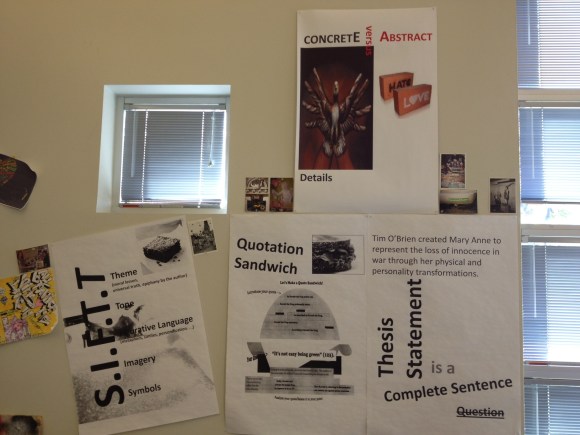
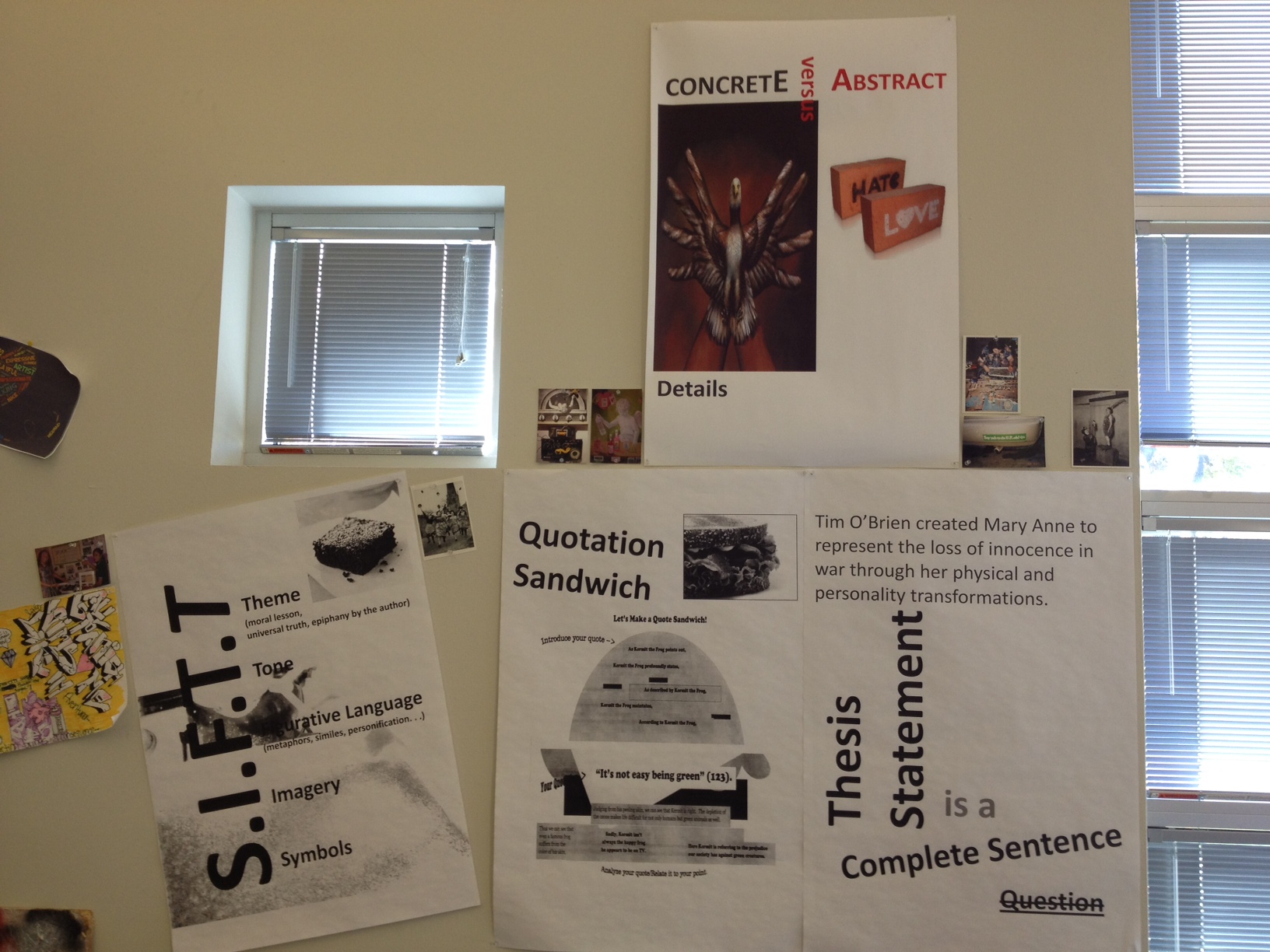
This is my visual culture wall containing some of the key concepts/skills the need to master throughout the year.
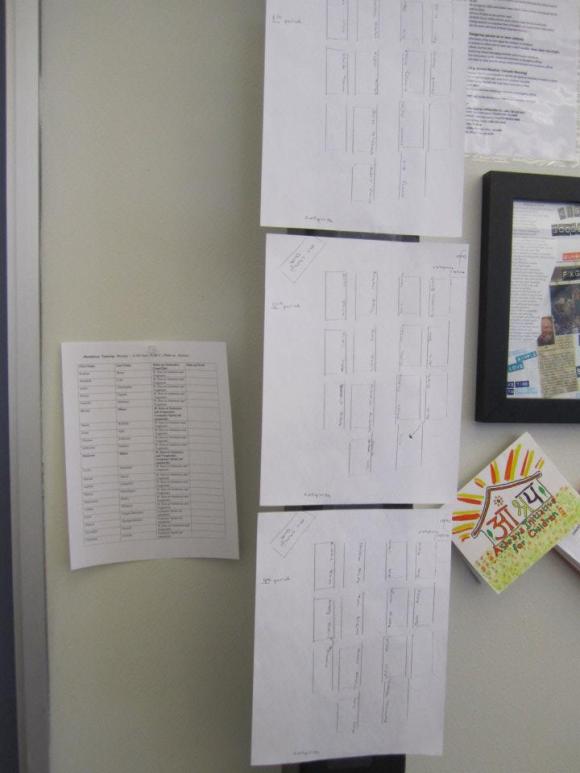
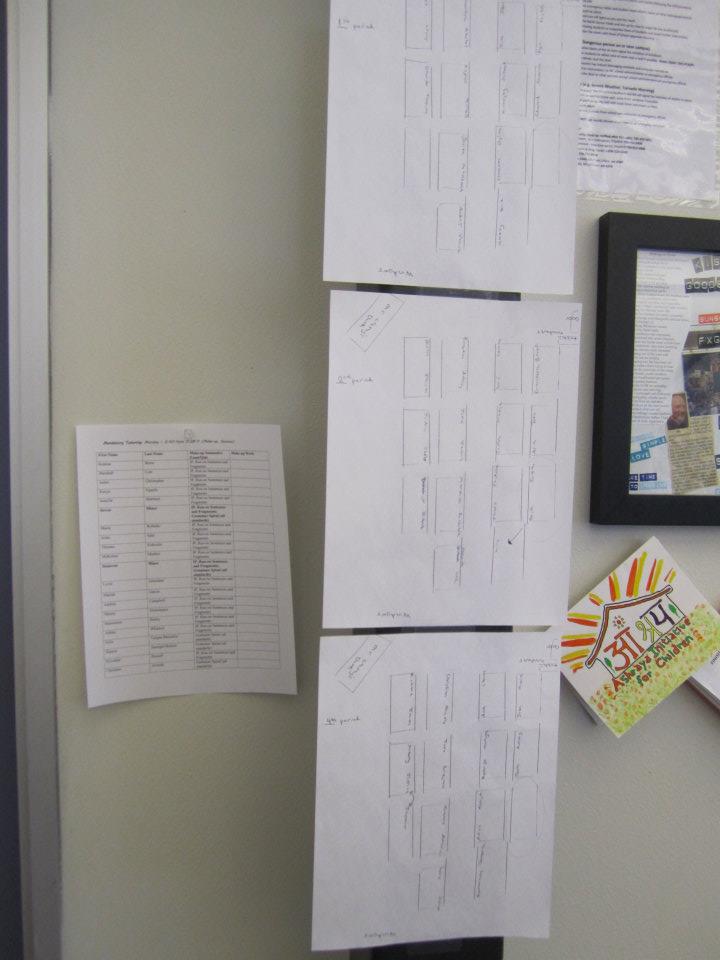
I keep my Mandatory Tutoring List posted by the door. I also have the seating chart up so I don’t have to repeat myself – I just point.

These are examples of one of the major projects we do in Humanities known as the Poetry Chapbook (five different kinds of poem assessed on ten different standards, all free verse, with the freedom or designing the book format in whatever form).

Close-up of the cool ‘record’ chapbook.

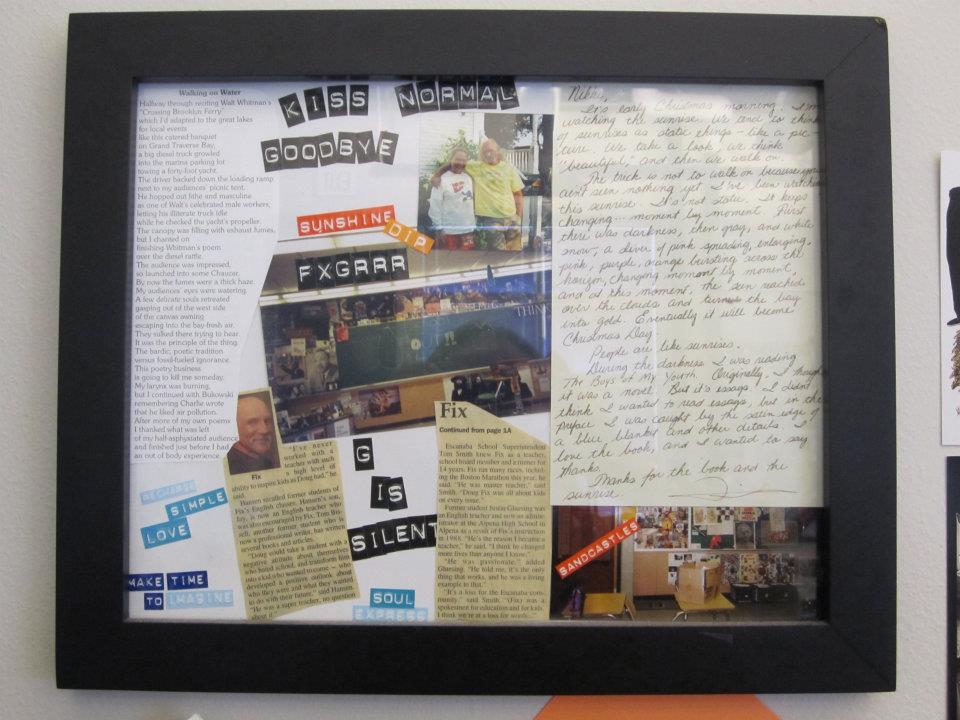
Inside the frame is a letter/card that my high school English teacher gave me – thanking me for the piece I wrote for him in his honor; also, there is a clipping about the teacher of the year award he received in Michigan and photos from his classroom. He is the reason why I teach or, what got me into teaching.

‘About Me Boxes’ – super cool project. Students create a box of some sort (I’m very open to size and shapes) and decide what they want to reveal about themselves that is reflected in their writing – for example, some students keep their boxes shut because they don’t want others to know what they can’t see. . .
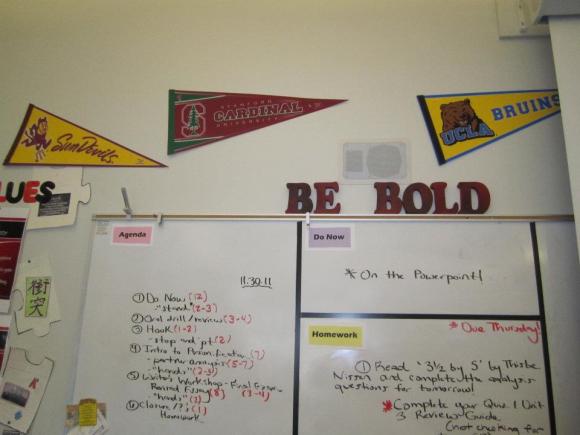
‘Be Bold’ is our class motto. From the quote: “Think Big. Be Bold. Drive change.” I use the awesome organization, “Echoing Green” as a sound board for our classroom. Pennants of colleges/universities add a nice reminder as well. Using board space well is key to student success. Here we have: Daily Agenda, Do Now, and Homework Assignment.
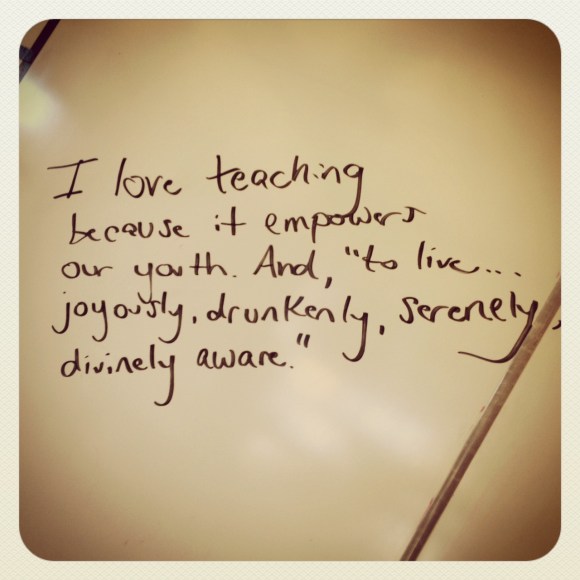
The quotation is from Henry Miller.

Tagxedo

What Tagxedo spit out for The Sacred Profession – I picked the shape and colors

I wanted to share a cool resource from this weeks classroom tour (coming later this afternoon!) teacher Nik Casey. She turned me on to a site called Tagxedo which lets you either take websites, articles or type in words and produce images like the one above I made by inputing this blog’s website. A world of ideas opened in terms of classroom applications. You could use the site as a means for students to share information about themselves in a public way (see an example in Ms. Casey’s classroom tour later today). You could also use images of authors and historical figures to create a nice visual/verbal description (see below).

Or of current events:

So many ideas. Check it out and if you come up with something awesome please share it with us! Thanks Nik!