Category Archives: Student Motivation

“Inspiration is for amateurs”

“Inspiration is for amateurs. The rest of us just show up for work.” – Chuck Close

I came across this quote from the renowned painter in an article about increasing focus on art in schools. Call me a slightly-bitter/neglected social studies teacher but I always roll my eyes when I hear about a new STEM initiative. Students love the humanities and to divorce children from the arts, literature and their history is to raise little monsters that have nothing to talk about at parties, nothing to think about in lonely moments, and ultimately nothing to nourish their immortal souls. It is definitively dehumanizing.

Tirade aside, this quote got me thinking about what great teaching often looks like. It isn’t about having a really amazing lesson once a week or even a mind-blowingly-awesome lesson once in a while but good teaching is steady growth for each student over the course of a school year. It is a marathon not a sprint, as they say. Good teachers often feel uninspired and really strong lessons can look fairly pedestrian but it is not about the show. Professional teachers, like professional artists, “just show up for work.”

You Have More (or my former student kicked a robber’s butt and I am in awe)

One of my teaching mantras is this: each child has unlimited potential. I am not the judge of my students’ potential, I am the enabler. I like to come back after the holiday break and tell students that no one, including themselves, knows what they are capable of doing. I usually teach a mini lesson on someone like Helen Keller or Nelson Mandela who defied the odds and accomplished seemingly super-human feats.

We form a self-image at an early age and typically by upper elementary labels either from peers or teachers – like “smart” or “shy” or “lazy” – have become a part of our identity. As a white woman from a middle class suburban upbringing, I have to actively monitor the way I perceive students of color from low income backgrounds. It is easy to let stereotypes from the media or my own experience lead me to make unconscious judgements about students’ abilities simply because of how they are dressed or how they speak. This is even more complicated when students, because of failing school systems, are years behind in basic academics. In my class I post a sign that reads “You Have More” – it is intended to be a reminder for everyone. I finished Mindset by Carol Dweck over the holiday break (review coming!) and realized the approach I teach in my classroom is what she calls a “growth” mindset and is one of the keys to success in any endeavor.

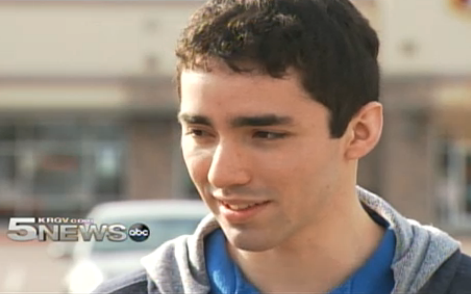
So this brings me to Isaac Vargas. I taught Isaac two years ago as a senior (and a Sophomore and Junior actually) and know him fairly well. He is a steady student, always polite and soft spoken. When I saw this news story it totally, completely blew my mind. A carjacker held Isaac up at gun point and the mild, shy, kind-of-skinny Isaac noticed the gun was unloaded and proceeded to fight off the attacker and then hold him down until the cops arrived. If you have 2 minutes, go to the website and watch the new’s report (here) because seeing Isaac tell the story is so great. We do not know what is inside of us . . .

Screen Shot 2013-01-09 at 9.38.03 PM

I watched this clip thinking “Wow, I had NO idea this was in Isaac!” My husband, who was his soccer coach, called him Isaac Bourne. No kidding. Isaac’s story is a good reminder to be open to possibility and potential in our students’ academics. None of us know the limits of our own or our students’ potential.

How do you maintain belief in your students’ potential? How do you keep from judging your students? I would love to hear tips or ideas!

Happy New Year!

Me and my former students from last year who returned from college to receive their IB Diplomas today at IDEA - so proud!

Me and my former students from last year who returned from college to receive their IB Diplomas today at IDEA – so proud!

Happy 2013! I have been enjoying a lengthy holiday break here at the Sacred Profession but am excited to get back into the swing of things with daily (or at least, attempted daily) postings. Today was a wonderful and inspirational day as I spent almost the entire day catching up with former students. One of the advantages of teaching secondary students is getting to see a quicker return on your investment. I have struggled over the past few weeks to be optimistic about the future of our country (or heck even humanity in general) but visiting with these remarkable young men and women today was like medicine for my soul. Despite the challenges our community faces here in the Rio Grande Valley, these kids tackled one of the most rigorous college preparatory curriculums in the world (the International Baccalaureate Diploma Program) and were successful. Now in college, they are working hard, volunteering, earning passing grades in challenging classes, holding down thankless jobs for much needed textbook money, and generally kicking butt. I am so proud.

I was particularly proud to see so many of these college students come early to help tutor current high school seniors in Jenny Corroy’s IB English class. Many of them showed up as early as 7:45am this morning in order to help out with Ms. Corroy’s first period! Alumni are such a powerful – and often untapped – resource in our schools. It was amazing to watch the intensity and energy level in these student-to-student sessions.

IMG_2696

At the end of each class, Ms. Corroy thanked the alumni and pointed out how they were beginning to give back to a community that invested so much in them. She also charged her current students to plan on coming back this time next year to tutor next years students. It reminded me of the quote:

“If you have come to help me, then you are wasting your time…But if you have come because your liberation is bound up with mine then let us work together.” – Lila Watson

The more we can empower our students with a “give”, rather than a “take” or “receive,” mentality the more we work to build healthy, sustainable communities. This is often a difficult task but after visiting with my former students today I was inspired to move into 2013 looking for ways to work along side my students rather than always at the front of the room.

Happy New Year!


Tragedy and our role as teachers

I have had a hard time reading and listening to reports on last Friday’s tragedy. I find the sadness overwhelming both as a teacher and as a mother. I listened to Christmas music instead of the news over the weekend. I closed my laptop and opened a novel instead. Just today, I read through a number of commentaries and reflections. Many people wrote urgent and impassioned calls for more attention to gun control and mental illness. I agree however I think we as educators have a more specific obligation in the matter of school shootings.

First, the Newtown shooting once again reaffirmed my resolve to mentally prepare myself for what I would do in such a circumstance. What is the best corse of action in this nightmare scenario? How could I best protect my students and save lives? Could my personal sacrifice potentially save others? What would that look like? In a previous post I wrote about resources for educators to consider when thinking through these difficult questions.

Second, I was particularly moved by a piece my friend Melissa Scheinfeld sent to me from the New York Times. At the conclusion of the article, the author Christy Wampole recommends the development of “curriculum that centers around an empathic practice.”  Wampole argues children need to be specifically taught to imagine themselves in other people’s shoes:

Empathy is difficult because it forces us to feel the suffering of others. It is destabilizing to imagine that if we are lucky or blessed, it just as easily could have gone some other way. For the young men, whose position is in some ways more difficult than that of their fathers and grandfathers, life seems at times to have stacked the cards against them. It is for everyone to realize the capricious nature of history, which never bets consistently on one group over another. We should learn to cast ourselves simultaneously in the role of winner and loser, aggressor and victim.

This rings particularly true to me both as a historian as well as a high school teacher. Empathy is a profoundly effective social regulator and the more we can instill it in our students the better. Here are some thoughts I have for teaching empathy in our classrooms:

  • Say “I love you” and “I believe you have what it takes” One of the signs I keep posted in my classroom is “I love you.” I reference this sign when I am accused of giving too much homework as well as when I have just finished a “I’m disappointed in you” diatribe. Affirm your students’ potential by teaching them a growth mindset. (I love Mindset by Carol Dweck! Can’t wait to post the review!)
  • Create a safe classroom: Hold your students to high expectations for behavior. Teach them conflict resolution protocols. Guide them through stress relief exercises and help them deal with their anxiety.
  • Use babies: Recent research shows a biological predisposition towards empathy – particularly empathy for babies. It turns out that humans are hardwired to feel sympathetically towards cute little rolly-polly people. This simple fact is the underpinning for a program called Roots of Empathy which brings babies and their mothers into classrooms for lessons on feelings and relation to others. I have tried this on a small scale in my own classroom with my own off-spring via pictures and actual visits. It works! Learn more here.
  • Expose your students to empathy invoking literature and historical figures: I still remember having to hide in the corner of the library after finishing Where the Red Fern Grows in 5th grade. Books can be great entry points for students looking for something or someone to connect. Likewise historical figures like Anne Frank, Alice Paul, and Helen Keller are almost impossible not to love.

How are you cultivating empathy in your students?

Celebrating the season in your classroom

On the one hand the holidays are “the most wonderful time of the year,” on the other hand I cannot think of a more slow, dragging, excruciating chunk of weeks in the school calendar than the weeks between Thanksgiving and the winter break. With just a few low-effort tweeks you can keep the cold out and bring in the cheer for your students (I’m riding the cheese-ball today folks!). Here are my ideas for making your classroom a little more jolly:

  • Keep the season open to everyone: Inclusive language is much more than simple political correctness for teachers; it is the cornerstone of a safe classroom. It takes a conscious effort on my part to say “Happy Holidays” instead of “Merry Christmas” but it makes a big difference to my students who come from other faith traditions. 
  • You cannot have too many twinkle lights: The are cheap and so pretty; get a couple of boxes and line your bulletin board, encircle your white board or classroom door, and put a few around your window.
  • During work time, play the Charlie Brown Christmas soundtrack: This recording is perfect for the classroom because it is largely instrumental, not overtly religious, and so, so, so good. Every year students ask what I’m playing or, if they know it, are super excited I have it on. It’s up beat and classic. I love it. I am listening to it right now . . .
  • Get a Santa Clause hat and/or beard. Wear it non-stop and without apology: This will make students smile every time they look at you. Alternately, get a one of those flashing light necklaces for a less hard-core-holiday look. “Come on Abby,” you say, “If I do this, the kids won’t take me seriously!” On the contrary colleague, my experience with dressing up is that students appreciate and respect the effort you are putting in to your job and reciprocate in kind. If you do this, please send me a picture.
  • Give your students the gift of cheap candy paired with meaningful words: I like to buy a couple of bags of holiday candy (Not candy canes because who actually likes those? I’m talking Snickers.) and either 1) write a Holiday letter that highlights fun times in your class since the beginning of the year and then make a copy for each kid. Don’t forget to write a quick personal note on each student’s letter. Then attach a piece of candy to the letter and hand them out before the break. Or 2) during group or independent work call up students one by one. Hand them a piece of candy, look them in the eye, and tell them why you are thankful they are in your class. I like to quickly jot a word or two for each student before I do this so that when I am looking at the student the words come quickly and easily. I have had students tell me that this gesture was one of the most significant and meaningful things I did in my classroom.
  • Focus on the giving part and avoid the getting: Planning a classroom party? How much more meaningful would it be to set up a volunteer experience? Pick up trash, collect cans for a local shelter and then deliver them, or write letters to soldiers stationed away from their families. There are so many programs designed to make this experience really easy to execute – do a quick search online.

How do you celebrate the holidays in your classroom?

Poet Taylor Mali “What Teachers Make”

“Definitely beautiful, definitely beautiful, definitely beautiful.” In case you need some inspiration on this cool Tuesday to continue soldiering on in our sacred profession. The holidays are almost here – hang in there!

Loving your team

Few things are as important for teachers as working with an effective team. It is this simple: if you love and get along with your blessedly competent colleagues you will be a happy teacher. The students can be unruly and the parents crazy but if you are on a strong team of teachers you can do anything. In my experience, great teams do not just happen. There is a great article on Edutopia about facilitating teacher teams which breaks down team management into three domains: planning, running an effective meeting, and navigating team dynamics. I highly recommend the read!

Any tips for working with your team teachers?

Ditch the lecture (or 8 tips to do it better)

You have likely heard that people only remember 20% of what they hear (which may be a rubbish statistic) and we all, theoretically, understand lecturing is a generally ineffective way to teach pretty much everything from science to math to bowling to potty training. I have a hard time letting it go mainly because I feel like I’m good at it AND I like to do it. Seriously, y’all. I’m funny, charming, I walk around the room a lot, I have a loud, clear speaking voice, I wear costumes, and my power points have cool pictures, large fonts and non-annoying transitions. It’s like I DID get to have that career in acting . . . captive audience! Colleagues, you know what I’m talking about.

The truth is kids do not learn if we just lecture, that is unless we are ineffectively executing alternative approaches. In fact, a recent Harvard study found:

. . . while problem-solving activities may be very effective if implemented in the correct way, simply inducing the average teacher employed today to shift time in class from lecture style presentations to problem solving, without concern for how this is implemented, contains little potential to increase student achievement.  On the contrary, the study’s results indicate that there might even be adverse effects on student learning.

This makes a ton of sense to me. I think we can all think of a time when we went to PD, heard about some amazing, alternative approach, did it in our classroom the next day and it was a total, epic fail. Regardless of how you approach direct instruction in your classroom, the key to learning anything is what is called the practice and feedback cycle wherein the student practices the skill or knowledge and then relieves feedback on their performance. Then they cycle begins again with more practice, this time better than the last, and more feedback.


Although teacher-centered instruction such as lecture can be effective, the main problem is it sucks up all of our class time and does not leave room for our students to practice. Rather than take an extreme position of “NEVER LECTURE EVER” I have settled on a few rules of thumb I personally follow to make sure my classroom is student centered:

  • Never talk for more minutes than the students’ grade level (i.e. 6 minute for 6th grade) without pausing for students to actively participate: We all have those moments where we look out over our classrooms, see the glazed look on our students spaced-out faces and realize we have become the teacher in Charlie Brown. We think we are teaching, our students just hear “Whamp, whamp, whamp, wahm, wahm.” My go-to ways to break up a lecture are: 1) stop and jot pause while students write the answer to a question and 2) turn and talk pause while students turn to a pre-ordained partner and talk about a question.
  • Setting up effective student-centered instruction is harder than just lecturing: The Harvard study hits the nail on the head. There is a reason why novice (or seasoned but less prepared teachers!) struggle to execute effective student-centered instruction. It requires buttoned-down classroom management as well as careful preparation. Here are two hybrid suggestions if you are just easing into shifting away from lecture: 1) “The Miss Messes Up” – purposefully make a mistake on a problem or example and post it up. Have your class read it and then write down where you went wrong. Then call up a student to talk through where you made the mistake and what they would do to correct it. Spice this up by acting indignant “What?! No I’m 100% right! What are you guys talking about?!?!” and then praising them for being eagle-eyed. 2) Modeling – write the essay as they watch and copy down what you do, solve the problem as they copy what you do. Just make sure you take time to pause and have them work on particular problems on their own. Also make sure you narrate the process going on in your head as you read, write or solve. Another strong idea is for students to record the process, instead of the example, as you model.
  • The more one-on-one instances of feedback the better: Find ways to bring the ratio down either through peer feedback or by individual conferences.
  • Use the yo-yo method: Instruct and then release to practice, clarify and release, clarify again and release again. Math teachers traditionally do this better than the rest of us. They model a few problems, answer questions and then allow students to work a set of problems. While students work the teacher circulates and clears up misunderstandings often bringing the class back to a whole group setting in order to emphasize points many students seem to misunderstand. In my history classroom, this process looks like me teaching a short 7 minute lesson of background on the Vietnam War. Then I would talk through the meaning of 3 political cartoons about Vietnam while students followed along. Then I’d have them work out the meanings of 10 additional cartoons in partners using their textbooks (or computers or, honestly, smart phones) to look up references they don’t get. I’d circulate as they worked and pull the class back together to clarify what “Kent State” is if everyone gets stuck.

How do you incorporate effective student-centered instruction and practice into your classroom?

Character Education and “Mind in the Making”

This fall I met an award winning pre-school teacher from Hawaii named Jonathan Gillintine. He was just lovely and so patient while I peppered him with questions about early childhood development (I have a two year-old daughter). “If you only read one book it should be Mind in the Making by Ellen Galinsky,” he said. I have yet to finish Mind in the Making (review to come when I do!) but it is blowing my mind both as a parent as well as a secondary educator. Each of the seven chapters focuses on a particular “life skill” children need for success and includes research based tips for how to cultivate these traits. Here, for example, are Galinsky’s suggestions for promoting self-control:

Suggestion 1: Help infants and toddlers learn to bring themselves under control.

Suggestion 2: Weave these skills into everyday activities in fun and playful ways – no drills, “teaching,” or expensive games or toys necessary

Suggestion 3: Promote focus – encourage your children to have “lemonade stands” [a personal interest or passion to pursue]

Suggestion 4: Play games that require children to pay attention (like Simon-Says)

Suggestion 5: Read stories to children in ways that encourage them to listen

Suggestion 9: Promote congitive flexibility – have children play sorting games with changing rules

Suggestion 10: Encourage children to pretend and make up pretend stories

Suggestion 11: Give children puzzels

Suggestion 15: Promote inhibitory control – play games where children can’t go on autopilot

Suggestion 17: Make sure your child is well rested and has breaks

All of these suggestions are backed by extensive research and there are even technique recommendations for how to practice these ideas with young children. What stood out to me as I read How Children Succeed and Mind in the Making along side each other is how although both authors are looking to specifically teach the same skills (executive functions, “character,” soft-skills, etc.) the techniques are entirely different. Look at the list above: at no point does Galinsky advocate using a report card for character development.

In addition to character report cards, Tough writes about a program called OneGoal that works with underserved children in Chicago. The program aims to raise their ACT scores by an average of three points as well as teach a set of nocongnitive academic skills such as “study skills, work habits, time management, help-seeking behavior, and social/academic problem solving skills.” Sounds great! We know these traits are critical for success but the program is using the traditional classroom, teacher centered curriculum model. Where are the puzzels? Where is time to make up pretend stories? What is preventing these teenagers from going on autopilot in class? I deeply believe the same suggestions for cultivating self-control in pre-school children could easily transfer over to adolescents.

An entire chapter of Tough’s book is dedicated to looking at a particular successful chess program at a Brooklyn middle school. The founder of the program appears to have developed a reflection process around chess that is a very helpful means of acquiring focus and thinking skills. By carefully examining mistakes children can improve their performance.

What would it look like to take the suggestion list above an apply it to middle and high school students?

When a teacher dies

Last night I went to the memorial service for a teacher my husband and I worked with for five years. Monica Castellano, or Ms. Rupard, was only 31 when she lost her fight against breast cancer. The room was absolutely packed with family, friends, other teachers, and student after student after student. Her former students lined the walls and waited outside. They wept openly and performed musical tributes. We watched in a reverenced awe as her husband, also a teacher, smiled broadly and told the room not to be sad. “All she wanted is for people to live up to their potential,” he said. “And so do what you have in you to do – for Monica.”

Colleagues, last night I was reminded again of the sacred nature of our profession. Monica’s life made a difference. Students are deeply impacted by the loss of a teacher and as I looked around the room I could see grief as well as a renewed sense of urgency in their desire to succeed. “It really makes me want to do something with my life,” one student said to me later, “I feel like I owe it to her.”

Monica’s service also reaffirmed the essential goodness of our profession – teachers are doing good in this world. Life is short but teaching is one heck of a great way to make a difference with the time we have. So be encouraged y’all . . . we’re doing good work. “Do what you have in you to do.”

One of my colleagues passed along this YouTube video of a dance Monica helped choreograph and perform. In it you can hear the kids chanting “Rupard! Rupard! Rupard!”